Posts

Showing posts with the label manjari-bhava

VMA 2.57 : That delicious moment

Image
It is almost impossible to be entirely  svārasikī  or  mantramayī  in one's  upāsanā . Some aspects of the one have a way of entering into the other. It is impossible for the  līlā  to remain still, since the movement of time no matter how limited is a necessary part of līlā . On the other hand, every verse of any  svārasikī  text like  Govinda-līlāmṛta  is a meditation in itself, a still picture as it were, just as a film is made up of a series of still images.
VMA 2.56 : The order to serve the Divine Couple

Image
After describing the  bhāva-bhakta , Prabodhananda Saraswati suddenly has an inspiration, a  sphūrti  of his  siddha-svarūpa , as if glorifying such devotees bestows such grace.  Of the eleven aspects of the siddha identity, one is to be the protected servant of one of the senior sakhis. What pleasure it is to get such an order from the sakhis!

VMA 2.41-43 :: The service activities of the manjaris

Image
The next three verses form a single unit ( sandānitaka ), with the subject and verb in the last line of the third verse. The rest of the verses contain the object of the verb, giving various descriptions of the gopis and their service. kāścic candana-gharṣiṇīḥ sa-ghusṛṇaṁ kāścit srajo granthatīḥ kāścit keli-nikuñja-maṇḍana-parāḥ kāścid vahantīr jalam| kāścid divya-dukūla-kuñcana-parāḥ saṁgṛhṇatīḥ kāścanā- laṅkāraṁ navam anna-pāna-vidhiṣu vyagrāś ciraṁ kāścana ||2.41|| tāmbūlottama-vīṭikādi-karaṇe kāścin niviṣṭā navāḥ kāścin nartana-gīta-vādya-sukalā-sāmagri-sampādikāḥ | snānābhyaṅga-vidhau ca kāścana ratāḥ saṁvījanādye sadā kāścit saṁnidhi-sevanātimuditāḥ kāścit samastekṣikāḥ ||2.42|| kāścit sva-priya-yugma-ceṣṭita-dṛśaḥ stabdhā sva-kṛtye sthitāḥ kṣiptvānyāli-pravartitā dayitayoḥ kāścit sukhelā-parāḥ | itthaṁ vihvala-vihvalāḥ praṇayataḥ śrī-rādhikā-kṛṣṇayor dāsīr adbhuta-rūpa-kānti-vayaso vṛndāvane'nvīyatām ||2.43|| Some gopi girls are grinding sandalwood p...

VMA 2.40 : Taking shelter of the handmaids of Radha

Image
Painting by Gadadhar Pran Das. preṣṭha-dvandva-prasādābharaṇa-vara-paṭa-srag-navābhīra-bālā mālālaṅkāra-kastūry-aguru-ghusṛṇa-sad-gandha-tāmbūla-vastraiḥ | vādyaiḥ saṅgīta-nṛtyair anupama-kalayā lālayantīḥ sa-tṛṣṇā rādhā-kṛṣṇāv akhaṇḍa-sva-rasa-vilasitau kuñja-vīthyām upaimi || I bow down before the young cowherd girls, adorned with the dearmost divine couple's remnants of ornaments, garlands, and garments, who by singing, dancing and playing musical instruments, and by offering garlands, musk, aguru, kunkum, fragrant scents, betel nut and garments, earnestly serve Sri Sri Radha Krishna while they enjoy unbroken pastimes in their own rasa in the groves of Vrindavan. The next few verses continue as Prabodhananda Saraswatipada meditates on the service performed by the sakhis and manjaris (2.41-43), as well as describing their beautiful forms (2.44-46). Verses 2.38-40 are an homage to these girlfriends who are also servants of Radha and her pastimes with the Di...

VMA 2.37 : My Swamini and her peerless lover, Shyam

Image
Dancing for Radha Raman in Vrindavan . Vrindavan Today . śyāma-prāṇa-mṛgaika-khelana-vana-śreṇī sadā śyāmalot- khelan-mānasa-mīna-divya-sarasī śyāmāli-sat-padminī | śyāmānaṅga-sutapta-hṛc-chiśiratā-kāri-sphurac-candrikā śyāmānanya-sunāgareṇa viharaty ekā mama svāminī || My Swamini is the forest where gambols the black buck of Shyam's life-breath ; she is the divine clear lake where glides the fish of Shyam's mind ; she is the lotus flower garden where plays the Shyam honeybee, and the brilliant moonlight that cools Shyam's burning, passionate heart. She alone dallies with Shyam, her peerless lover. This verse is unusual in the Vṛndāvana-mahimāmṛta because it does not fit the usual pattern of specifically mentioning Vrindavan by name. Instead Radha is herself identified with the forest in the first line where the word vana does appear. But throughout the verse, all the manifestations of Nature, whether the lakes or lotus flower garden, o...

VMA 2.22 Remember Radha's kinkaris in Vrindavan

Image
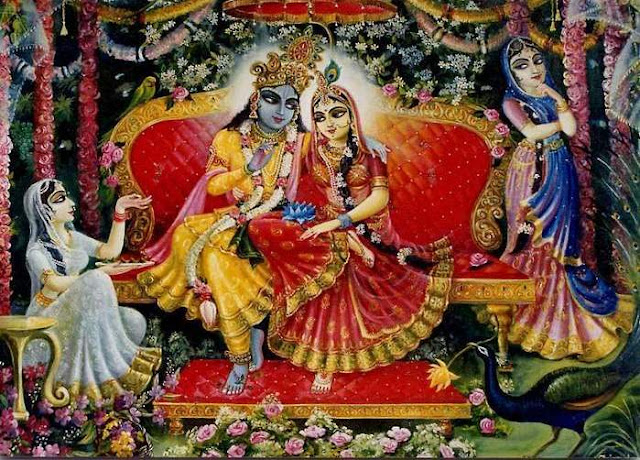
See yourself as a manjari . (Mahanidhi Madanagopal Das) lolad-veṇyaḥ pṛthu-sujaghanāḥ kṣāma-madhyāḥ kiśorīḥ saṁvīta-śrī-stana-mukulayor ullasad-dhāra-yaṣṭīḥ | nānā-divyābharaṇa-vasanāḥ snigdha-kāśmīra-gaurīḥ vṛndāṭavyāṁ smara rasamayī rādhikā-kiṅkarīs tāḥ || They have braids that swing to and fro, beautiful broad hips and slender waists, splendid necklaces decorating the flower buds of their beautiful breasts, various splendid ornaments and garments, glistening golden complexions the color of saffron, and youthful beauty that is as sweet as nectar. Remember Sri Radha's maidservants like this in Vrindavan. After following the illumination coming from the very central point of all existence, Prabodhananda finds Radha and becomes absorbed in her, and then the effulgence emanating from Radha starts to take shape and becomes the world of Vrindavan, which includes the sakhis and dasis. To belong to this world, one must become that light, which is both friendship and service...

VMA 1.54 : All the Supreme Lord’s festive pleasures, and more

Image
B.G. Sharma rādhā-nāgara-keli-sāgara-nimagnālī-dṛśāṁ yat sukhaṁ no tal-leśa-lavāyate bhagavataḥ sarvo’pi saukhyotsavaḥ | tatrāśā ṁ  yadi kasyacin nirupamāṁ prāptasya bhāgya-śriyaṁ tad vṛndāvana-nāmni dhāmni parame svīyaṁ vapur naśyatu || All the festive pleasures of the Supreme Lord cannot match even the smallest drop of the happiness the sakhis feel when their eyes are absorbed in the līlā ocean of Radharani’s lover. If anyone is so fortunate as to desire to attain the hope for this incomparable happiness, then let him give up his body in this supreme abode named Vrindavan. (1.54) Commentary Although they have been mentioned briefly a couple of times in earlier verses, we now come to this important glorification of the sakhis, whose mood is the one aspired to by rasika sādhakas everywhere. It is often said that the mood of Vrindavan is feminine, that Krishna is the only male. Although this may appear to the uninitiated as just another kind of fantasy, ...

Another side of Bhaktivinoda 17: Mahaprabhu’s Matchless Gift, Part One

Although Krishna can be worshiped in any one of the five divine rasas of shanta, dasya, sakhya, vatsalya or madhura, our Gaurasundar’s main focus is in madhura rasa. Hence a majority of his followers adopt this mood to worship Krishna. This verse by Rupa Goswami supports this trend: anarpita-carīṁ cirāt karuṇ ayāvatīrṇaḥ kalau samarpayitum unnatojjvala-rasāṁ sva-bhakti-śriyam hariḥ puraṭa-sundara-dyuti-kadamba-sandīpitaḥ sadā hṛdaya-kandare sphuratu vaḥ śacī-nandanaḥ Let’s always behold Sri Sachinandan’s beautiful golden form in the core of our heart. For he advents in Kaliyuga to offer the people his most personal bhakti treasure, the highest form of madhura rasa. (Śrī Caitanya-caritāmṛta , Adi 1.4) We have already seen that a number of madhura bhakti paths are available in Thakur Bhaktivinoda’s guru parampara. And in the upcoming chapter a few more will be discovered, but for the moment it will be helpful to analyse what we have presented so far. The first four chapter...