Posts

Showing posts with the label Meghaduta

Rūpa Gosvāmī's Dūta Kāvyas: (5) Modern and classical literary sensibility

Image
  Modern and classical literary sensibility Since Sushil Kumar De is one of the few modern scholars to have attempted a critique of Gauḍīya kāvya , it may not be untoward to discuss his assessment of that body of work and Rūpa in particular. Consciously or unconsciously, De writes with the optic of a modern man applying today's literary standards to the literature of another age. For him, Kālidāsa is the unique bright spot in Sanskrit literary history and the language has only known decline since his time. The innumerable poets who inevitably used Kālidāsa as their model were imitators in whom there was little or no originality. About the Gauḍīya  writings, though he admits that the apotheosis of the Rādhā-Kṛṣṇa legend, with all its paraphernalia of impassioned beatific sports, was no doubt a literary gain of immense importance and lifted the devotional literature from the dead level of speculative thought to the romantic richness of an intensely passionate experience, he qua...
Rūpa Gosvāmī’s Dūta-kāvyas: (3) The Dūta-kāvya Genre

Image
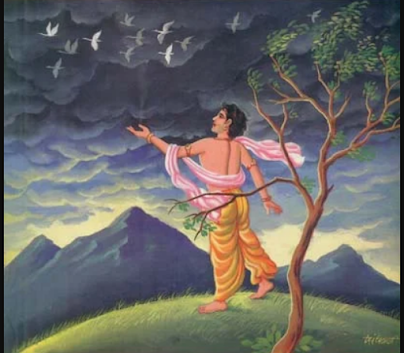
 (2)   Uddhava-sandeśa and Haṁsadūta are written in a genre fairly well-known throughout the Sanskrit world as dūta-kāvya , first made popular by the immortal Kālidāsa, whose Meghadūta (“The Cloud Messenger”) is the prototype of the genre. The dūta-kāvya is a type of khaṇḍa-kāvya , or shorter poetic work distinguished from the mahā-kāvya , which is divided into several sargas , each dominated by a different meter. [1] According to the writers on rhetoric, khaṇḍa-kāvyas deal with a single subject matter, either of the erotic ( madhura-rasa ) or religious ( śānta-rasa ) sentiment. Stotras are considered to be the religious khaṇḍa-kāvya and the Gosvāmīs and their followers wrote numerous works of this kind, such as Rūpa's Utkalikā-vallarī , Raghunātha's Vraja-vilāsa-stava and Vilāpa-kusumāñjalī , and Prabodhānanda's Rādhā-rasa-sudhānidhi , etc. Most of these stotras are characterized by the use of a variety of meters.   The erotic khaṇḍa-kāvya , however, is ...