Posts

Showing posts matching the search for vanaṁ tu sāttviko

Priti Sandarbha 5 6 : Perishable means have perishable results, but this does not apply to bhakti

Image
tad evaṁ brahma-sampattir vyākhyātā || From previous anucchedas. These two verses, especially the second, were supported by the material covered in Anuccheda 5.1-5. यत्रेमे सदसद्रूपे प्रतिषिद्धे स्वसंविदा। अविद्ययात्मनि कृते इति तद् ब्रह्मदर्शनम् ॥ Where these real ( sat , gross) and unreal ( asat, subtle ) forms that have been created (imposed) on the self by ignorance are negated through self-knowledge, that is the vision of Brahman. (SB 1.3.33) यद्येषोपरता देवी माया वैशारदी मतिः। सम्पन्न एवेति विदुर्महिम्नि स्वे महीयते ॥ The sages know that should the goddess māyā in the form of unerring knowledge withdraws, the jīva attains the wealth [of bliss of Brahman] and is exalted in its own glory. (SB 1.3.34) Present in the state of living liberation ( jīvan-mukti ) is this goddess ( devī ), i.e. luminous, Māyā, in the form of unerring ( vaiśāradī ) knowledge ( matiḥ or vidyā ), i.e, the knowledge given by the viśārada or Supreme Controller, which is a particular func...
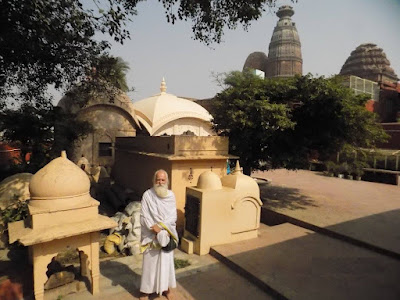
An old baba looked at my hand... FB Memories April 29

Image
An old baba looked at my hand and told me I would not die in Vrindavan. Perhaps a relevant post from five years ago in view of my present circumstances. Of course I do the best I can and all the advice is respected as relevant. Krishna is indeed everywhere, just sometimes more apparent than others,

Globalization and the Dham (Part III)

Image
Crowds in the narrow alleyways trying to get darshan of Bihariji. Part I of this three part series. [Introduction, Places of Pilgrimage: Tirtha, Kshetra and Dham, Vaishnava criticisms of tīrtha-yātrā, Braj/Vrindavan is a dhāma] Part II of this three part series. [How a Gaudiya Vaishnava performs pilgrimage to the Dham, The eternal glory of residence in the Dham] Part III : Sattva-guṇa and Nirguṇa, Globalization and the Dham, Can a culture truly be translated? Sattva-guṇa and Nirguṇa At this point it is necessary to say a word or two about faith in the Dham and the Vaishnava dogma that the Dham is beyond the qualities of nature ( nirguṇa , rather than saguṇa , or under the control of the material qualities of sattva, rajas and tamas ). [ Bhakti Sandarbha  (152-159) ] According to the Gītā and Sāṅkhya philosophy, everything in this world is just the interplay of these three qualities. How can something like Vrindavan, which is clearly being influenced by the mat...

VMA 1.80 Run Run to Vrindavan

Image
Vrindavan sky mahā-bhāgyair avāptaṁ vapur idam ihākarṇi mahimād- bhuto vṛndāṭavyāḥ kalitam akhilaṁ svapna-sadṛśam| śubhāyām āśvāso nahi nahi matau nāpi vapuṣi kṣaṇe’sminn eva tvaṁ tad abhicala vṛndāvana-vanam|| O friend, by great good fortune you have attained this body through which you have heard Vrindavan's wonderful glories, and learned that everything in this world is like a dream. Don't ever put any faith in a beautiful woman, no, no, nor in the mind, nor in the body. In this very moment, you should run towards the Vrindavan forest. (1.80) Commentary Jiva Goswami spends several sections of the Bhakti Sandarbha (152-159) explaining that bhakti is free of the material qualities. In this discussion, he also mentions the Holy Dham and so I wish to discuss the nirguṇa nature of the Dham here. The Holy Dham is not within the qualities of material nature. So we have to understand what that means. What does it mean that bhakti is not within the guṇas? A...

The Holy Dham is Nirguna and independent in its power

Image
Jiva Goswami spends several sections of the Bhakti Sandarbha (152-159) explaining that bhakti is free of the material qualities. In this discussion, he also mentions the Holy Dham and so I wish to discuss the nirguṇa nature of the Dham here. When I started Vrindavan Today , I was imbued with a nostalgia for the Braj-Vrindavan of yore, which looked lost under the influence of India’s economic development. At the same time, we have an apparently insurmountable dogma: The Holy Dham is not within the material qualities of nature. So we have to understand what that means. What does it mean that bhakti is not within the guṇas  when everything in this world, according to the Gita and Sankhya philosophy, is just the interplay of these qualities? How can something, like Vrindavan, which is clearly being influenced by the Maya saṁskāras that surround it, the saṁskāras of saṁsāra , be considered transcendental to the guṇas ? The relevant verse here is the following from the El...